
I recently purchased a colour photograph of the late German screenwriter Herbert Lichtenfeld on eBay:

“Herbert Lichtenfeld (16 June 1927 – 11 December 2001) was a German screenwriter known for his extensive contributions to German television, particularly in the crime genre.”
“Born in Leipzig, Lichtenfeld began his screenwriting career in the late 1960s and became one of the most prolific writers for West German public television broadcasters ARD and ZDF. He is best remembered for authoring numerous episodes of the long-running crime anthology series Tatort, as well as scripts for other popular detective shows such as Derrick and Der Alte. His work often featured complex characters and social commentary, helping shape the style of German Krimi series during the 1970s and 1980s. Lichtenfeld died in Hamburg.”1
The back of the colour print is blank and has no date stamp nor photographer/photo agency details. The seller chose not to respond to my request for information.
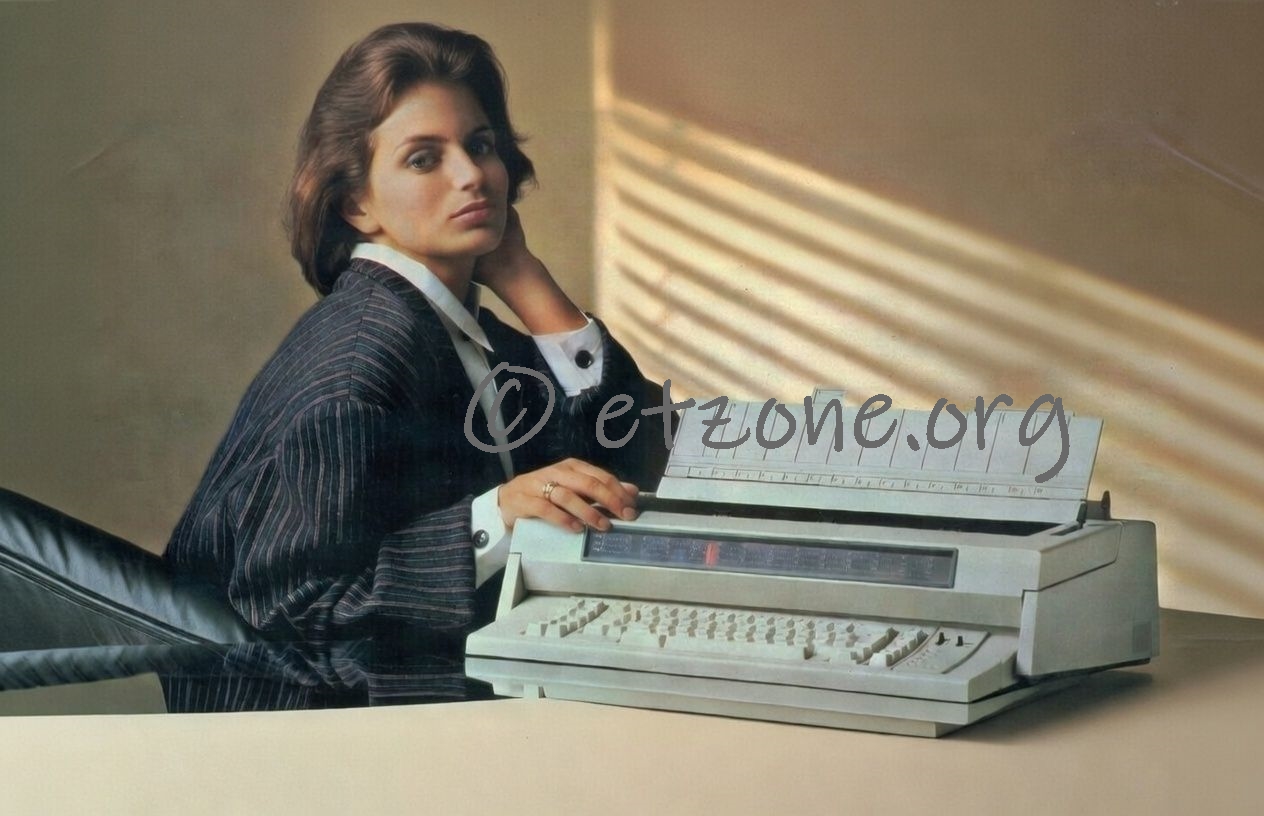
A little detective work allowed me to narrow the timeframe down to the mid 1980s. The electronic typewriter shown in the photograph is a Triumph-Adler Gabriele 8008/L , a portable typewriter first released in 1982 at a time when “portables” were heftier than they subsequently became in the 1990s.

Nicotine yellowing on the Lichtenfeld typewriter (note close proximity of a well-used ash tray with burning cigarette) suggests the typewriter was not new at the time this picture was taken.
Matching Herbert’s hairstyle and apparent age (late fifties) to a similar photograph found online and dated June 1986, supports the idea that “my photograph” was taken in the same year.

We can surmise that this typewriter was used heavily during the period 1985 to 1989, when Herbert was writing scripts for the medical drama “Die Schwarzwaldklinik” (The Black Forest Clinic).
Herbert also wrote episodes for another medical drama “Der Landarzt” (The Country Doctor) from 1987 to 1997, during which time we can reasonably suppose he transitioned to writing his scripts on the keyboard of a PC.
I’ve since come across other photos from the same Lichtenfeld photo shoot on the Getty Images website (but didn’t see the exact same photograph listed).
Did I unwittingly purchase an unauthorised copy? In which case, I suppose there’s little point trying to confer copyright by adding a watermark. In any event, I imagine Getty Images have bigger fish to fry, especially nowadays with AI companies crawling all over their portfolio.
In what was described as a landmark case, Getty Images recently lost an infringement claim against a UK-based company, “Stability AI” , alleging copyright infringement and accusing the AI company of copying more than 12 million images to train its Stable Diffusion image model. Getty’s central copyright claims were largely rejected by the UK High Court in November 2025.
In cases where Getty Images are the ones being sued, potential plaintiffs are less likely to succeed.
In 2016, renowned photographer Carol Highsmith sued Getty Images for $1 billion, alleging that the agency improperly demanded licensing fees for images she had taken and donated to the public domain through the Library of Congress. However, the federal court dismissed nearly all of her copyright and statutory claims, ultimately throwing the case out entirely.
Speaking of AI, in “AI mode”, Google tells me Mark Getty, co-founder of the aforementioned visual media and stock photography giant “occasionally used a typewriter to help draft and shape business correspondence during the initial funding and founding stages of the company in the 1990s”.
No images were provided to support such a claim however, Getty-owned or otherwise.
What we do know is that Getty Images own the copyright on a great many writer-typewriter stock images, including two excellent black and white photographs of the English writer Martin Amis working at the keyboard of a large Triumph Adler SE-1000 series office electronic typewriter circa 1990 ─ images I’d like to be able to use without having to pay several hundred dollars for the privilege. (The Lichtenfeld print cost me $10.)
I can’t remember where I got these low-res Martin Amis examples from (more watermarks added to appease the typewriter gods):


1 Information from Grokipedia.
You must be logged in to post a comment.