
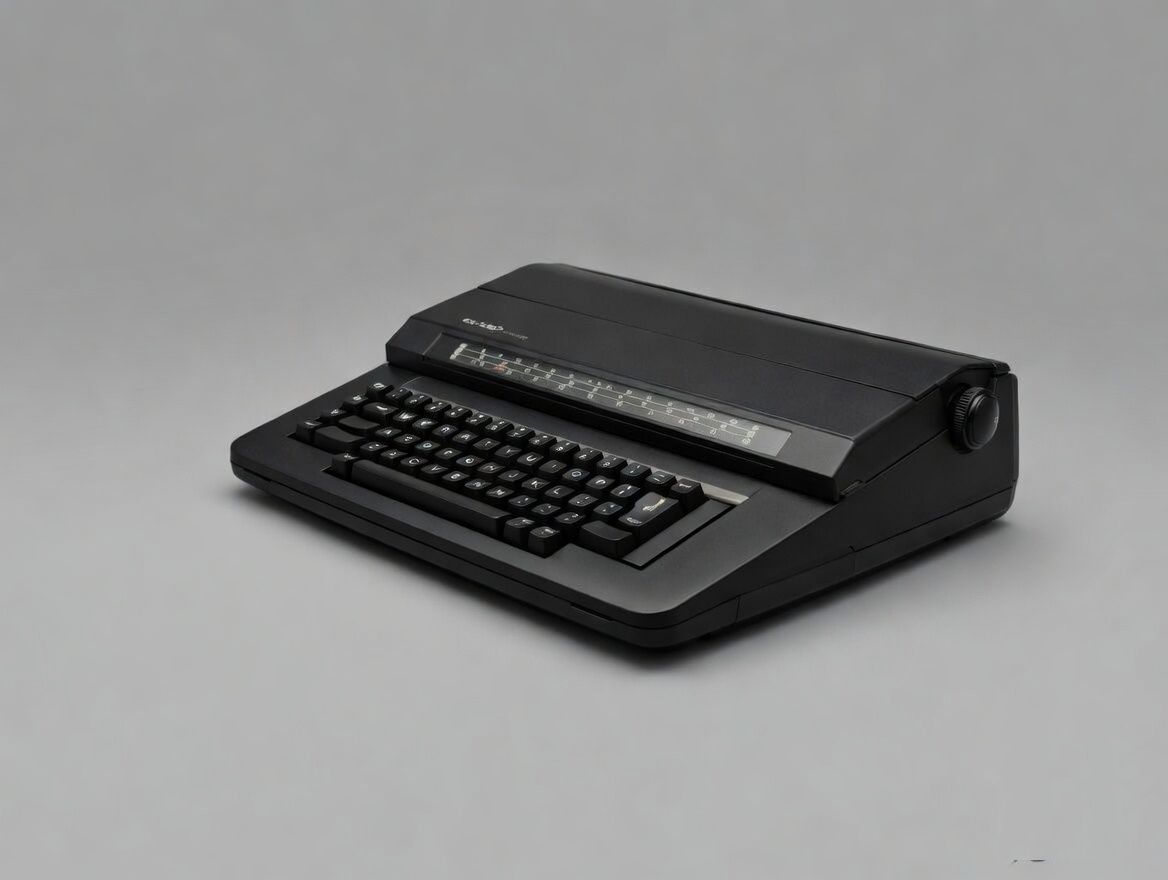
Not many models from either of Sharp’s PA-3100 series of portable electronic typewriters (two series were manufactured back-to-back) seem to have been sold new in Australia, the evidence for that being the small number of secondhand models I’ve come across in online listings over the years.
(Come to think of it, electronic portables of any flavour are getting harder to find these days.)
So when this “first generation” model PA-3100E came up locally on Gumtree curiosity got the better of me and I brought it home.

Looking at USA and UK advertising from the mid-to-late 1980s, sales of typewriters from the two series appear to have overlapped, with models of either series being quite expensive at the time they were released.
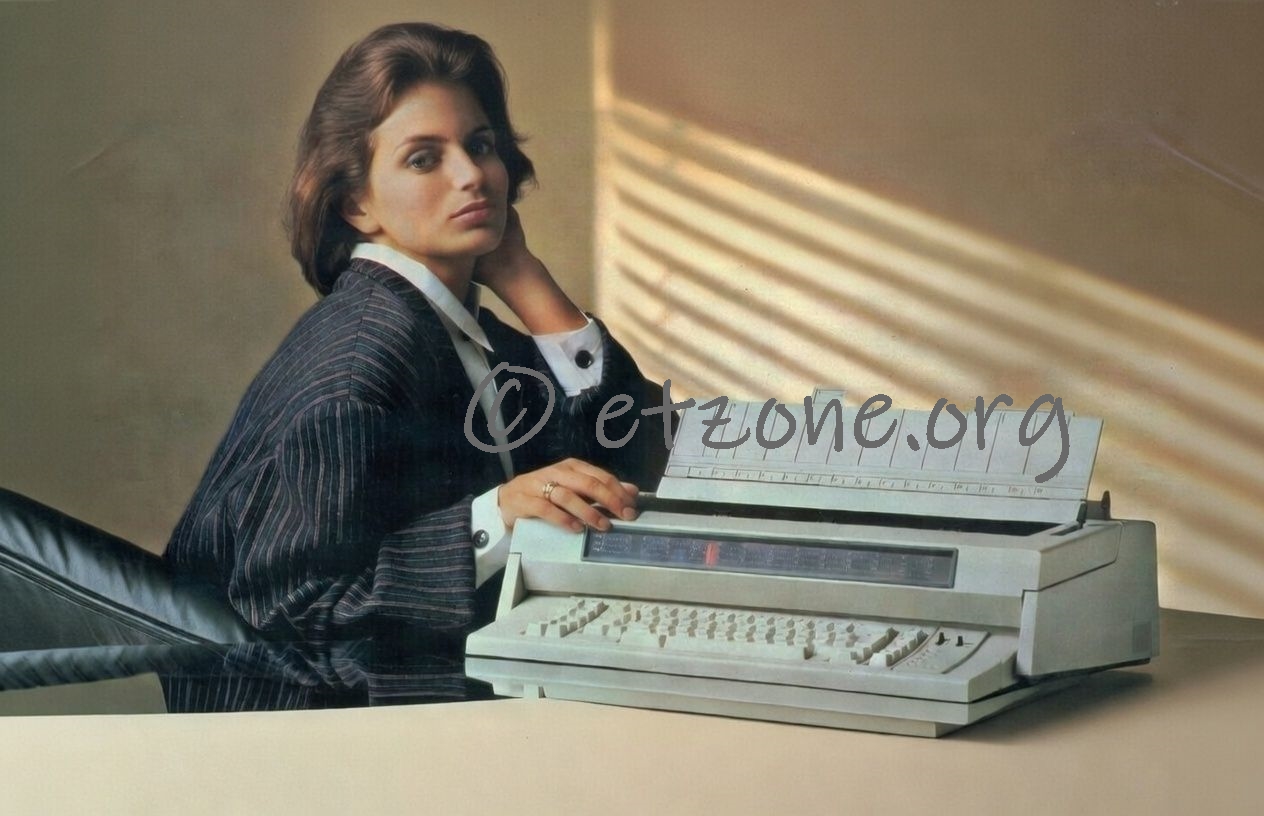
PA-3100 “first-generation” models were also advertised in Australia, but I can’t find many examples. This ad dates back to December 1986:

PA-3100 “second-generation” models came along a year or two later. This American ad dates back to December 1988:

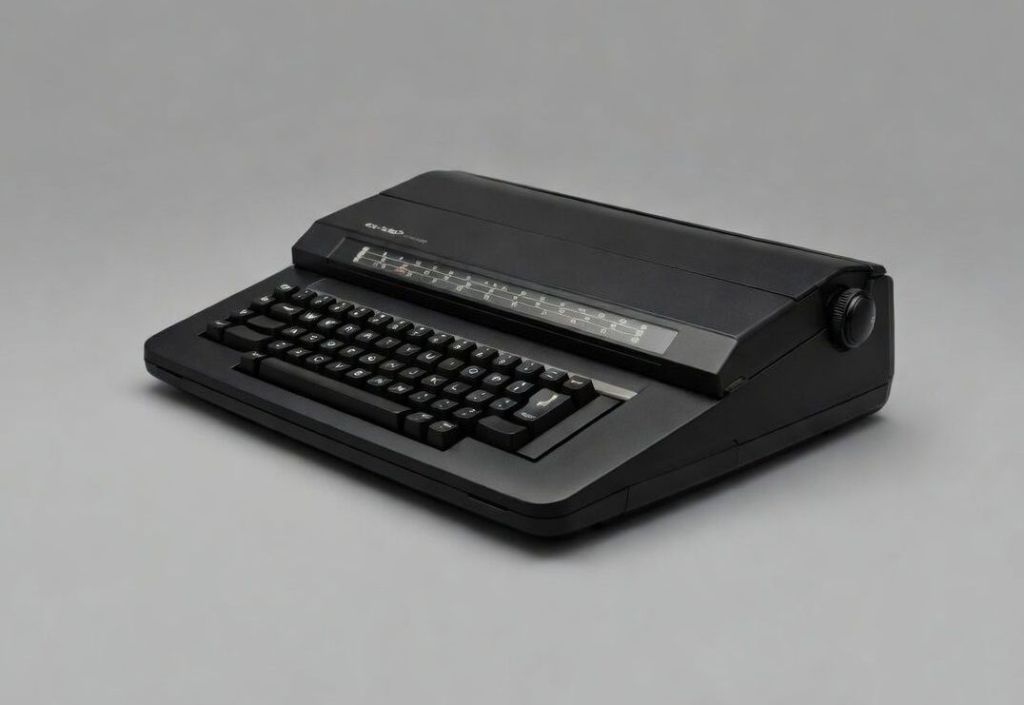
One question that arises when I compare the first generation PA-3100 E with a second generation model PA-3100 II already in my collection, is why Sharp decided to change the styling and went from this:

To this:

While I like the streamlined simplicity of the earlier series, models from Sharp’s second PA 3100 series do offer a few practical improvements.
Perhaps the most obvious differences are the chunkier and therefore easier-to-grasp platen knobs and a deeper and more flexible keyboard cover, a cover which also protects the facia of the margin scale.

Both of these design features are illustrated in the instruction guides for models of the second PA-3100 series:


Models from the first series have much narrower platen knobs and a narrower keyboard cover which leaves the facia of the margin scale exposed.

Furthermore, the keyboard cover is made of a more rigid plastic which makes it difficult to attach and remove, even when you follow the guidelines in the instruction guide.

You can’t help wondering which will snap first; your patience or the tabs on the underside of the keyboard cover.

Not so good (in my opinion) is the change Sharp made to the design of the door on the rear cable stow compartment.
On first-generation models, the door on the cable stow compartment is completely detachable, eliminating the need for fragile plastic hinges.

While you could argue a detachable door is easy to misplace, it’s also (potentially) easy to replace. At one time, you could order a replacement from Sharp. These days you’d probably need to swap one from a donor machine.
On second-generation models, the door to the cable stow compartment is hinged and, as we all know, plastic hinges are notoriously fragile. Once the door’s broken, you can’t replace it.

Having said that, the size of the cable compartment is quite generous.

When it comes to technical specification, typewriters of the second series offer several advantages. Models of both series have the same 12 cps print speed and the same 96 character cassette printwheel, however typewriters of the second series offer Proportional Spacing (PS) in addition to triple (15, 12, 10) pitch printing.
These newer models are also lighter (5.5 kg as opposed to 6kg) despite having greater dimensions.
Sharp PA-3100E (first-gen) spec:

Sharp PA-3100S (second-gen) spec:

Models from either series are pretty good and much better than ultra-portable Sharp PA-3000 series models. Sharp ribbon cassettes are still fairly easy to find …

But good luck trying to find a replacement cassette printwheel.

You must be logged in to post a comment.