
How to rank one electronic typewriter over another or choose which particular model or brand to buy? It can be trial and error. Here are 5 criteria that might help inform your choice or preference.
1. Design
Unless usability is paramount, you probably won’t buy a typewriter you don’t like the look of. Aesthetic appeal is important, but so is functional design.
2. Build Quality
Build quality should be factored into a typewriter’s design, however a well-designed typewriter is not necessarily a solidly-constructed typewriter and vice-versa.
Since the “solid bones” and the quality plastics of predecessor electric models tended to be carried over to newer electronic models, early “old school” electronic typewriters tend to fare better in this regard. Over the years, electronic typewriters became progressively less metallic and more plastic, with the plastic in question being predominantly lower-grade cream or grey-beige ABS plastic.
3. Technical Specification
The performance and the functionality that a typewriter provides (print speed, printing pitch, noise emission, microprocessor, memory, display, etc) can be assessed based upon its technical specification and category.
In general, as build quality declined over the years, technical specification improved thanks to the widespread availability of lower-cost and rapidly-improving electronic components.
Portable (Personal) electronic typewriters designed for home use will typically have a lower technical specification (and build quality) than Office (Professional) and Compact (Semi-professional) typewriters. Within each typewriter category, a range of low-spec to high-spec model variants were marketed.
Of course, it’s horses for courses. If a lower-spec typewriter does the job it was intended for, who cares about its lack of superfluous features? “Plain Vanilla” (Uncomplicated) can be good.
4. Usability
A typewriter’s usability “as new”, will depend on its design, build quality and technical specification. A typewriter’s usability “as is”, will also depend on its current working condition. Another important consideration is the availability of consumables. In general, the rarity of a typewriter will be matched by the scarcity of its printwheels and ribbon cassettes, making it more “collectable” than usable.
5. Collectability
Typewriters which, for whatever reason, enjoyed a limited production run, are likely to be harder to find than more commonplace mass-produced models. The most obvious examples are early prototypes, limited-run “special editions” and otherwise commonplace models with an unusual or “exotic” OEM branding. Availability and “exoticism” will vary by country or region, of course. What’s easy to find in one locale, may be something of a rarity elsewhere.
If the rarity of a typewriter and its consumables make it more collectable than usable, its “cosmetic” condition will be just as important as its working condition. The overall condition of a typewriter will depend upon its history, work environment and frequency of use.
Electronic typewriters are subject to abuse and neglect by their owners. Typewriters that stand up best to that abuse and neglect will be the ones with a better build quality. Signs of wear and tear and “patina” aren’t necessarily a bad thing. Missing or broken parts or replacement parts that detract from a typewriter’s originality are.
Owner/historical provenance and any idiosyncrasies that make a typewriter unique will also add to its “collectability”, for example, company labels, office equipment distributor stickers and “personal touch” custom stickers, etc.
An Example:
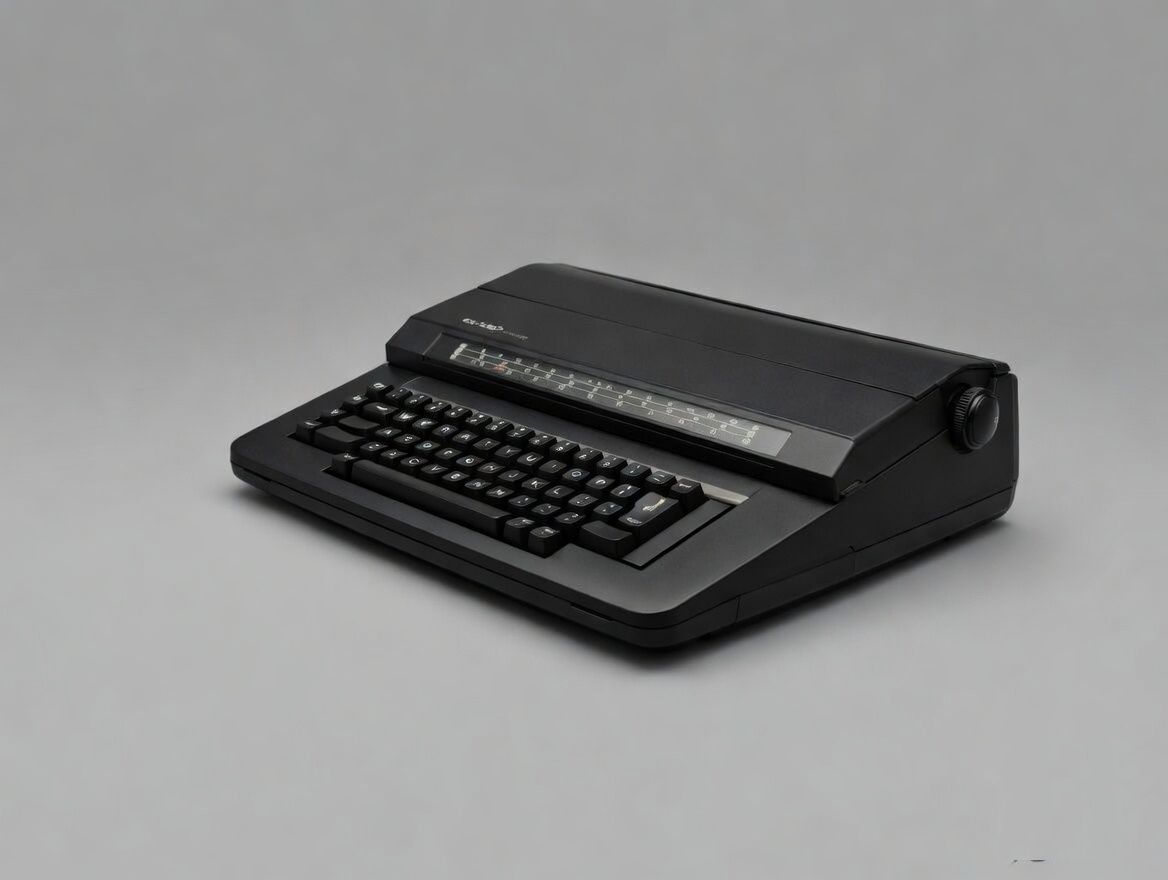
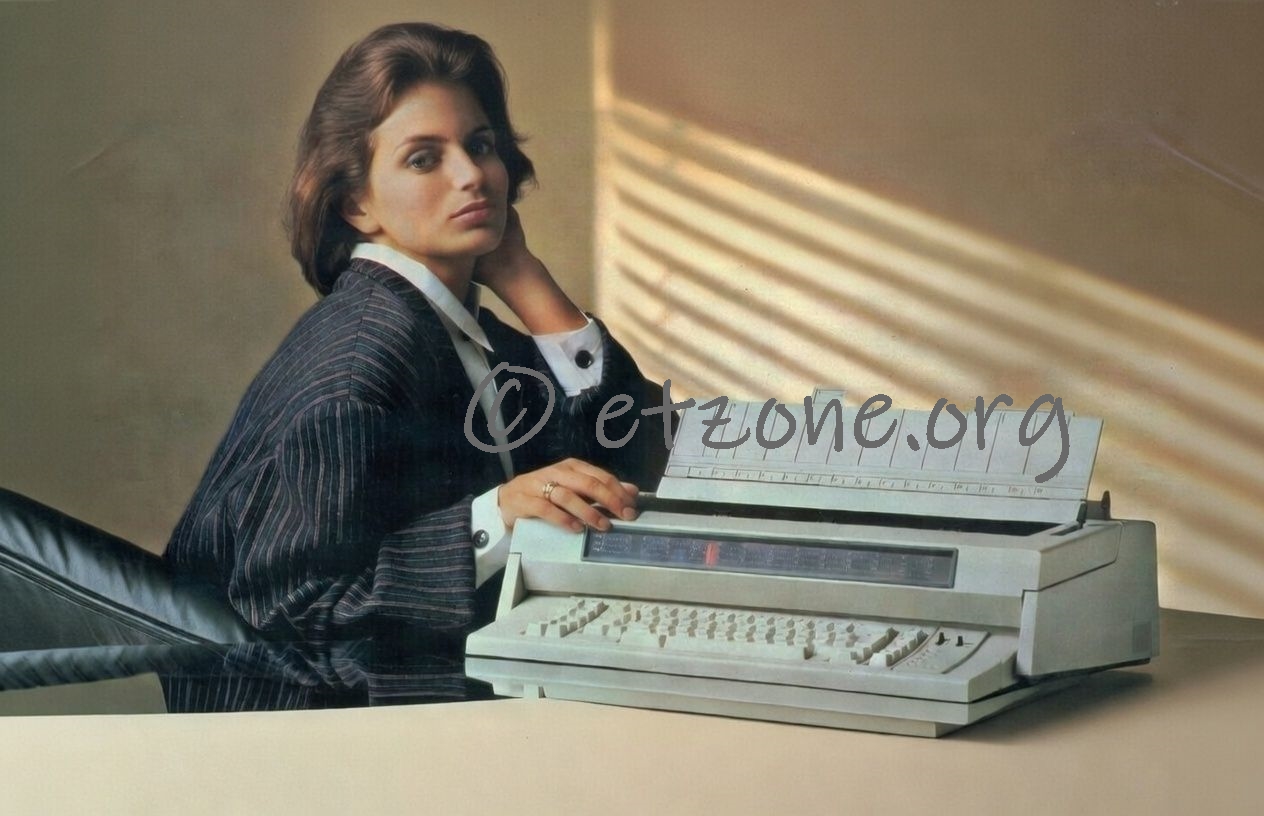
Take the 1985 Silver Reed EX-42, for example, a typewriter with an excellent design and build quality, however, a poor technical specification compared with later models in its category, plus a scarcity of consumables, makes it collectable rather than usable. 8 out of 10 (D=2, B=2, T=1, U=1, C=2)

(Something else I’d rate 8 out of 10 …)

You must be logged in to post a comment.