
In a syndicated article published in various daily newspapers across the USA and Canada in May 1983, RICOH found itself mentioned in the same breath as established typewriter manufacturers IBM, Olivetti, SCM and Brother, as well as two of its biggest rivals in the copier business, Xerox and Canon (also established electronic typewriter manufacturers).1

The point being (I suppose) that photocopier companies were very much involved in the office automation business (the article being about Brother Industries feeling itself “forced” to move into the field of office automation).

Still, RICOH’s elevation to the ranks of “challenger” in the office electronic typewriter market is perhaps stretching it a bit. Why?

Because Ricoh (at the time this article was published) was much less a player in the electronic typewriter market than it was a player (and perceived to be a threat) in the market for daisywheel printers.
Indeed, when Qume decided it needed a presence in the low-cost printer market, it outsourced the manufacture of a low-cost printer to Tohoku Ricoh Co. Ltd. (a RICOH subsidiary established in July 1967 to manufacture office equipment and consumer electronics).
Manufactured in Japan, the Letter Pro 20 was released in November 1983. Less than a year later, Tohoku Ricoh Co. Ltd found itself named as a respondent in the second of two investigations (what became known as “Rotary Wheels I” and “Rotary Wheels II”) alleging infringement of Qume’s “129 patent” ─ a patent related to the optical sensor and the logic design used in its daisy wheel and print carrier technology.
Of the fourteen respondents who reached a settlement with Qume, only Tohoku-Ricoh admitted infringement of the “129 patent” (by virtue of having been found to have breached its license and supply contract with Qume).
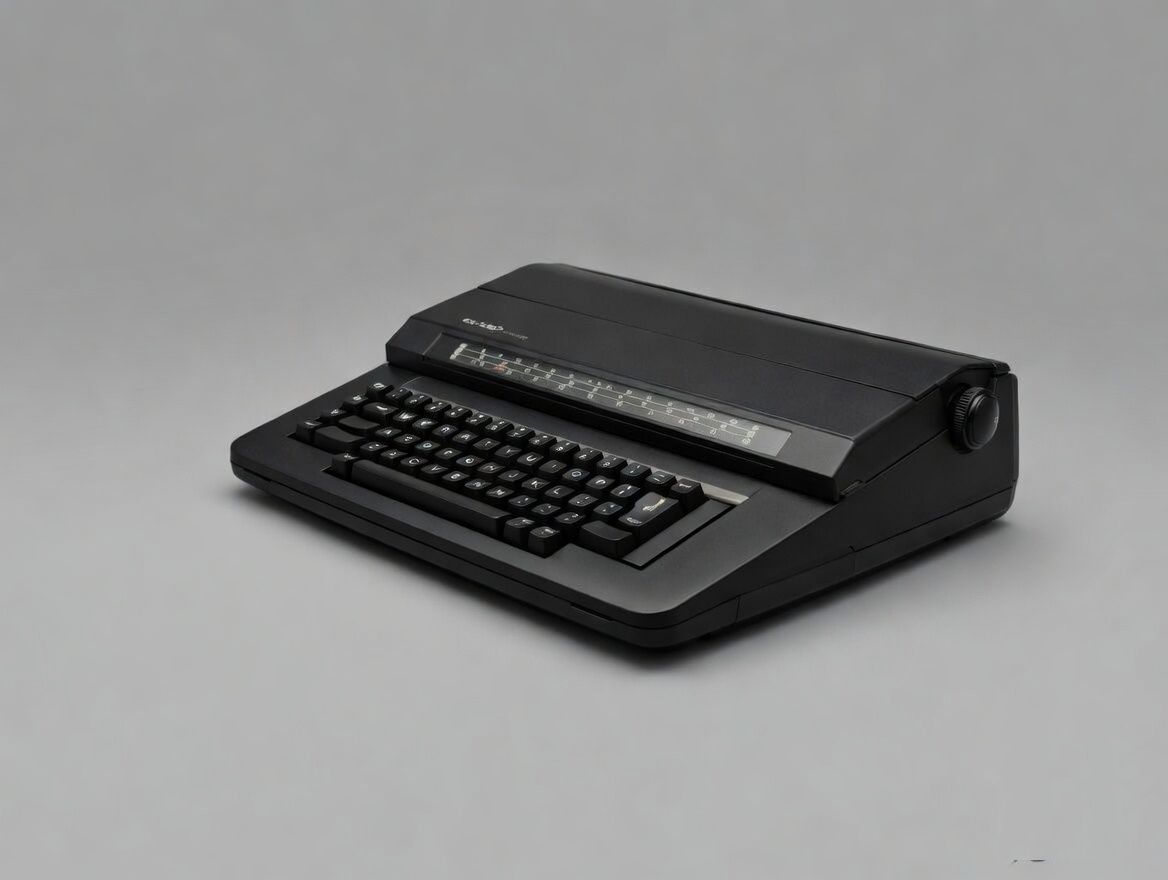
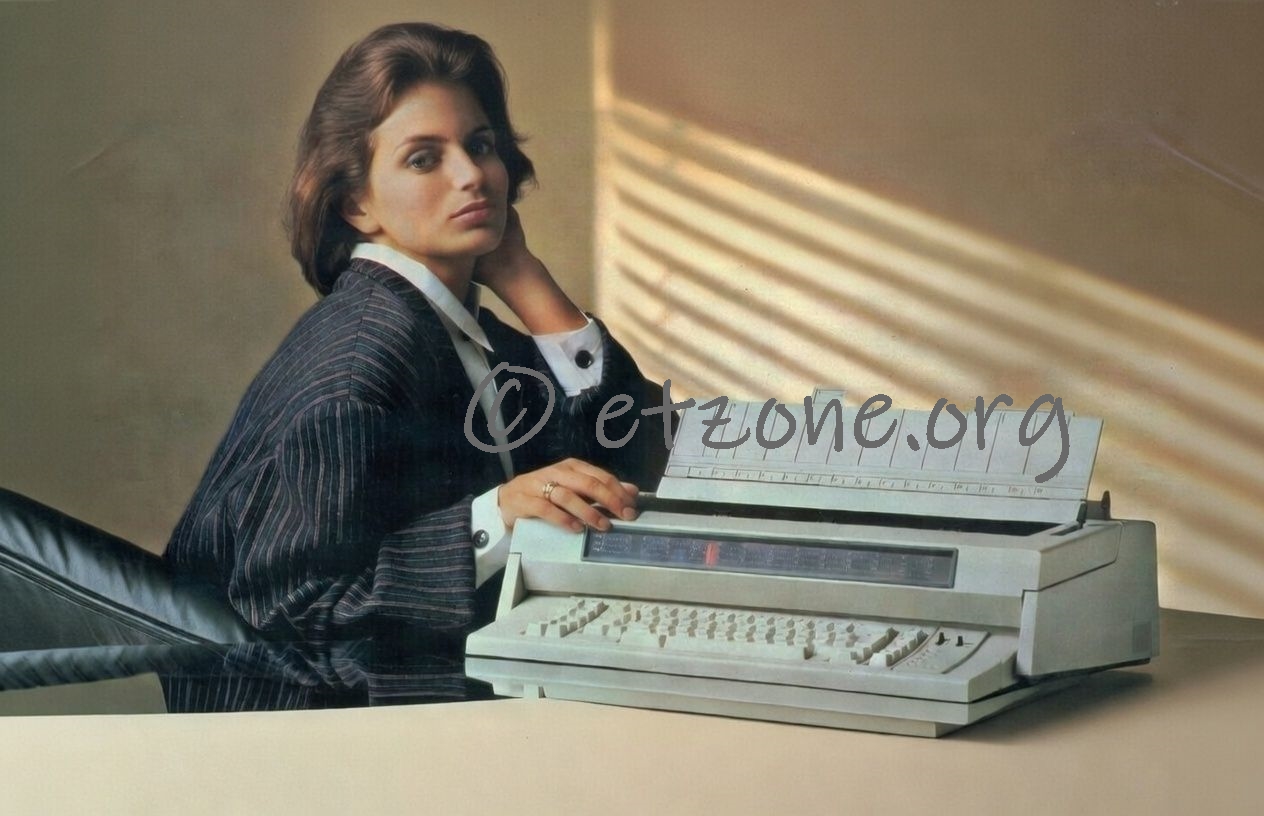
In November 1984, having reached a settlement, Tohoku-Ricoh announced the release of two office electronic typewriters, the EasyTyper IT510 and IT520 for sale in the USA and Canada.

Both typewriters came with a 100 character printwheel capable of four pitch (10, 12, 15 and PS) printing at an impressive top speed of 20 cps.

Optional extras included a memory upgrade from 8000 characters of text to a maximum of 24,000 characters of text, external disc storage and a communications mode. The EasyTyper 520 came with an integral 20 character LCD screen.
Like other copier manufacturers, RICOH chose to give these typewriters away with its copiers.

Or else sold its typewriters with other freebies.

Needless to say, RICOH’s “EasyTypers” fail to get a mention in the company’s product history.
1Japanese business leader pressed to use automation, by Steve Lohr, New York Times News Service, The Paduca Sun, Kentucky, USA, 8th May 1983
You must be logged in to post a comment.