
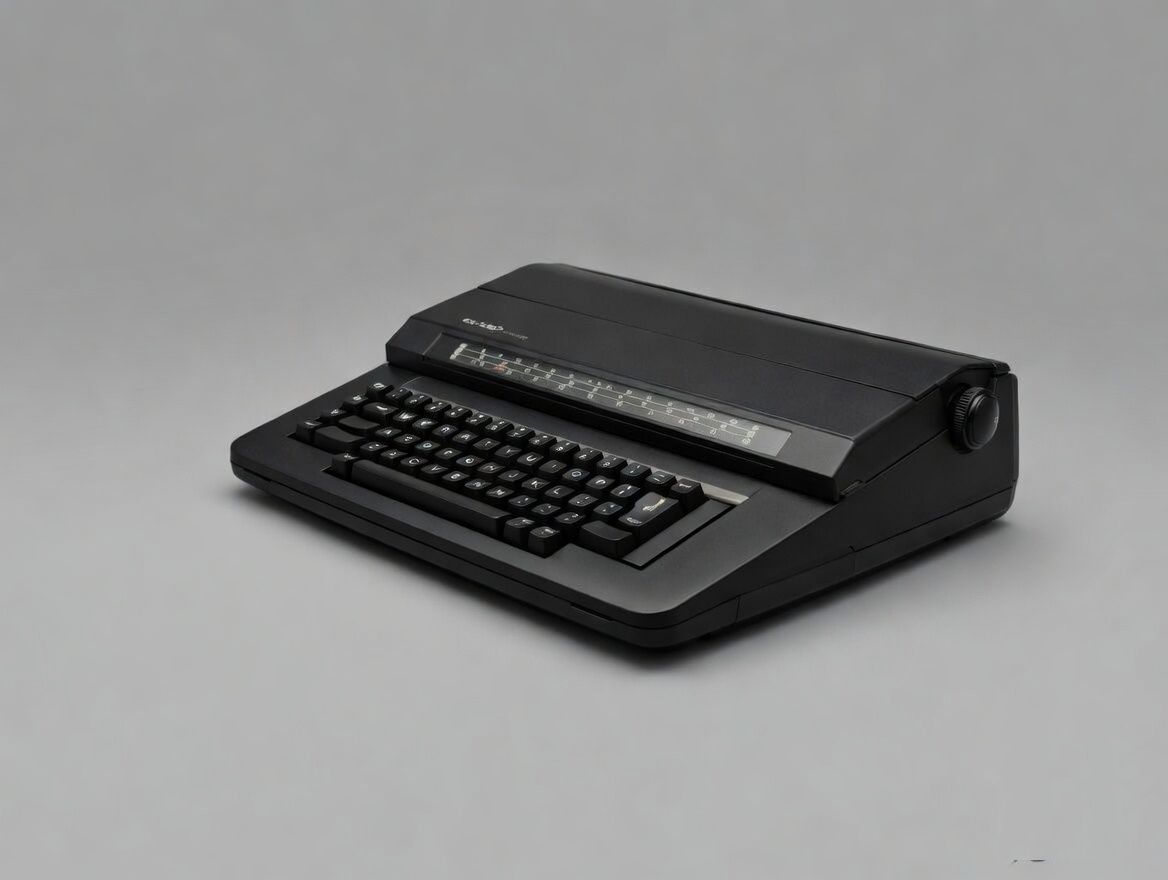
On first glance, this UK eBay listing for a Sharp PA-3320 “portable electronic typewriter” had me puzzled.

It’s a good example of what I like to call an “anomaly”. In other words, a typewriter that don’t seem to fit into any of a manufacturer’s known series. In most cases, this is either because the typewriter was given a model name/number change that doesn’t fit with the usual model name/numbering scheme (as is the case here) or because the typewriter was outsourced from a third-party.
Sharp assigned a “PA” model number prefix to its portable and ultra-portable models1 and used either a “ZX” or (later) “XQ” prefix for its office (professional) and compact (semi-professional) typewriters.

The “PA”-3320 doesn’t fit into the usual scheme of things.
One clue as to this typewriter’s true identity is the Britannia “Office Equipment” sticker on the rear of the machine.

However, it’s the ribbon cassette that gives the game away:

This isn’t the standard Sharp ZX-3CS1 (Carma Group 2819SC) ribbon cassette used in Sharp PA series portables. Instead, it’s the Sharp ZX-004CC (Gr. 189 C) ribbon used in Sharp office and compact electronic typewriters, including Sharp ZX-300 series compact typewriters circa 1984.

The same ribbon was also used in TEC office electronic typewriters, plus an unsighted “Exxon 210” (possibly an electronic typewriter sourced from TEC).


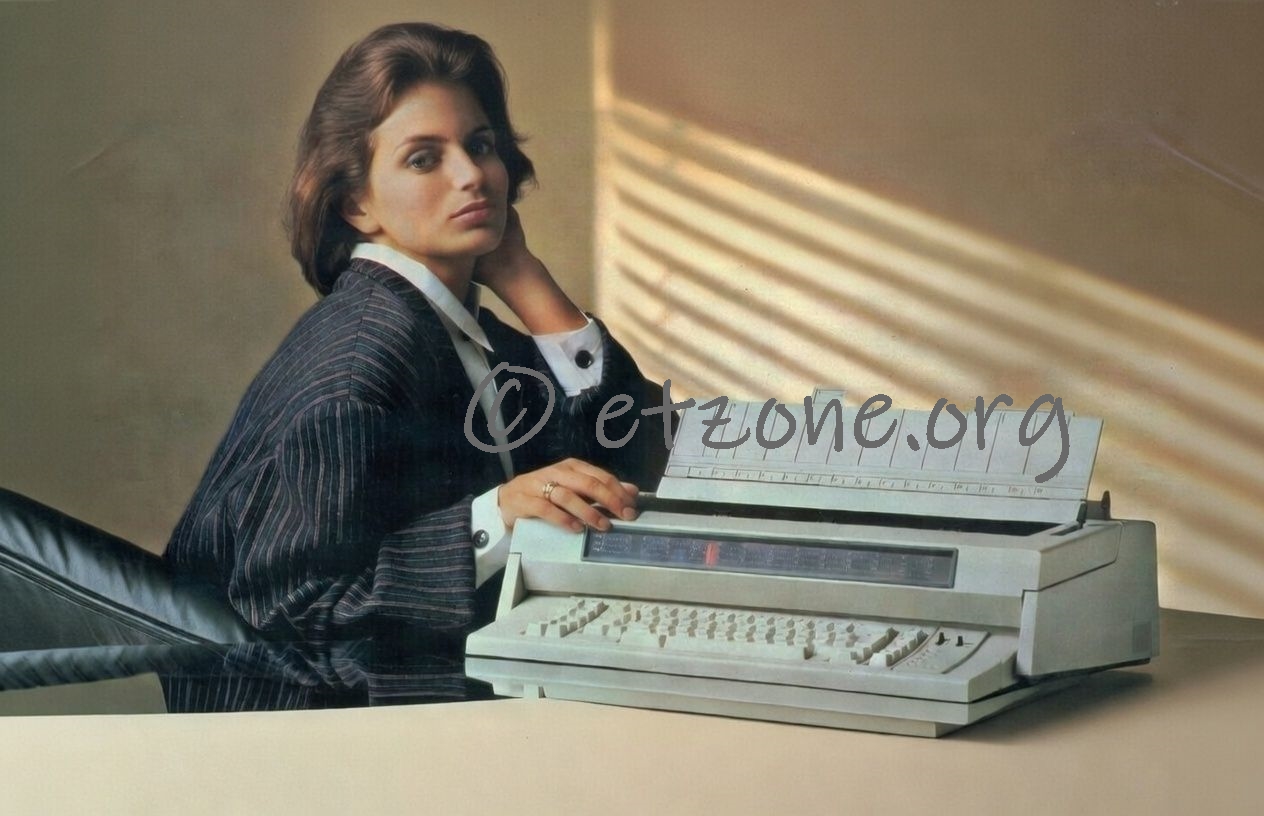
The anomalous PA-3320 appears to be a later reissue of the Sharp ZX-320 compact electronic typewriter first released in 1984.
The 7A513416 serial number suggests 19872.
According to ribbon listings the PA-3320 sits in the middle of a PA-3300, 3320, 3330 trio, which most likely correspond to earlier models ZX-300, 320 and 330.
So the PA-3320 is a rare find. Unfortunately, this yellowed eBay UK example is clearly not in good cosmetic condition. Its faded keycaps are indicative of pad-printed legends and a cheaper build quality overall.

At the time of writing, a more pristine example is available for sale at Toronto Typewriter.

Along with an earlier Sharp ZX-330 (which would be my pick if I lived in Canada).

1 In 1985, Sharp decided to make “information processing for the individual and the home” a key priority in generating new product demand. Company president Haruo Tsuji presented the idea of “personal appliances”as opposed to conventional “home appliances”. “PA meant the personal version of Office Automation (OA) products (products such as word processors and fax machines that make paperwork efficient by automation) targeted at the individual consumer rather than the business office.”
2 An analysis of serial numbers suggests the first digit is a year code, since they always seem to correspond to the expected year of release. In the case of UK-made typewriters the second digit is always “A” (so not a month code and possibly a factory code for the Wrexham plant) followed by six digits. In some cases the last digit is “X” or “Y” which suggests that the last digit might be a month code, where January is 0, and October, November December are 9, X and Y, respectively. It would also make sense that there are less serial numbers ending in X and Y because a production release at the end of the year is less likely. Thus, a five-digit number component allows for monthly production numbers in their tens of thousands, which also seems right.
You must be logged in to post a comment.